
Ep113 Chris Blachut: How to Decode Your True Wiring and Stop Drifting Through the Wrong Life

 Apple Podcasts
 Spotify
 Castro
 RSS Feed
 In this episode of Strategy in Action, host Jason Croft sits down with Chris Blachut, founder of Innate Edge, to tackle one of the most consequential and most overlooked challenges in business and life: figuring out who you actually are at your core and building everything around that.
Chris brings a fascinating story to the conversation. After leaving a comfortable corporate career at Procter and Gamble, pre-retiring at 27, and spending 13 years bouncing through entrepreneurial misadventures with no common thread connecting them, he went deep into neurobiology, personality science, and AI to crack a code he wishes he had cracked decades earlier. The result is a systematic, human-guided assessment process called the X-ray, designed to cut through scattered self-perception and reveal the coherent inner engine that has been driving a person all along.
Jason brings his signature ability to bridge complex ideas into practical clarity, pressing Chris on the real-world application of this work, sharing his own experience going through the X-ray, and drawing out what makes this process genuinely different from the Myers-Briggs assessments most people take, feel mildly validated by, and never think about again.
Viewers and listeners will come away knowing:
• How to identify the core verb that describes the unique way they naturally generate value in the world, and why naming it precisely changes everything
• Why most self-assessments deliver a distorted reflection and what it actually takes to see yourself clearly
• How to build a life narrative around your verb, your violation, and your vision so that motivation stops being something you have to manufacture
• What pragmatic passion really means and why chasing passion without it is just running cleaner fuel through a still-broken engine
• How Chris used years of deep research into neurobiology and personality science, combined with AI and hands-on work with real clients, to turn a deeply personal breakthrough into a process others can now access in under fifteen minutes
Whether you are a seasoned entrepreneur trying to figure out what comes next or someone who has always felt the quiet pull that something is not quite right with the direction you are heading, this episode gives you a concrete, human, and surprisingly fast starting point for finally understanding what you are built for.
Chris Blachut 0:00
We can reframe the way you see yourself in a more coherent way that doesn't seem as scattered, and seems like more comes together. That's almost like undistorting this mirror reflection of yourself. You see something cleaner, and if you can, and then what is the opportunity of that? Well, the opportunity is to build on that rather than all this scattered self-perception that you have right now. Welcome to Strategy in Action, where we reveal how industry leaders build real market gravity-the force that naturally attracts opportunities, partnerships, and profits-you get raw insights, proven frameworks, and strategies that actually move the needle in your business. Let's get started.
Jason Croft 0:40
Chris Blahoot, welcome to the show. Thanks, Jason. Pleasure to be here. Pleasure to be chatting. Absolutely, I want to give a quick shout out to Diana Early right off the bat. I'm producing her show on the in the background there. You were just a guest on her show, and that's what got us connected there. And so for one thing, for an even deeper dive with Chris on on his background and everything, especially go check out the pressures of privilege. Dana does a great job pulling that up, and honestly, lets it lets it be a little bit of a a jumping off point for this episode. So I'm glad you're here. Glad to be here too, and glad you reached out after listening to that and went through the X-ray that I talked about a little bit with Diana, and then we got to talk about
Chris Blachut 1:30
decoding you, and now talk about more about that in this conversation.
Jason Croft 1:33
And and that's really the the core topic I want to dig into with you today is this idea of decoding yourself, right? We we all have, I guess, varying degrees of experience with different assessments, either way back in elementary school when somebody assessed you, or today all the way up to Myers Briggs, right? Everything in between, and I think there's a there's a fundamental question to be asked in all of this: is why why why does that matter? And I'm really interested to dig into this with you because of your assessment, your X-ray that you've put together, and I want to hear more in terms of your process with that and where that that came in because it is a unique take on you know the assessment you know in in general terms, but give us a little bit of background first from you know Procter and Gamble days and leaving sort of corporate behind and those next phases that that kind of got you here.
Chris Blachut 2:53
Yeah, totally. So, and of course, I'm super excited to talk about decoding because I feel that my own code is to decode. So this is something I can talk about for days and hope to encourage. Just my my mission and objective is to make this more available to the whole the whole world. Make it more of a systematic thing because from my experience that I'll talk about, we'll talk about it's when you do it, you feel like, wow, why didn't I know this earlier? And that's the impetus for what I'm doing now, right? So to get back to my story, I. I from like from early years, even after after high school, sort of I grew up pretty conventionally, but then started to chart my own path, going to Toronto instead of Vancouver, Canada, where I'm from, and making exchange to France on my third year, and then getting a job in Switzerland instead of in Canada after my work, and then pushing to get transferred to Panama City, Panama, instead of staying in Switzerland. And then when I was 27 years old in 2013, I what I called pre-tired. I pre-retired just to see what retirement's all about because I'd saved a bunch of money. I've been always been very thrifty and was lucky to get paid pretty well from starting in Switzerland and getting an expat job in Panama. And so, I said, you know what? I don't. I know that I don't want to spend the rest of my life in this comfortable role in corporate. It's not that I disliked it that much. Actually, it was was much better than lots of people talk crap about working in a corporate. I enjoyed it. I'm really glad that I did it. It trained me to be professional, to be a grown up, exposed me to a lot of the world, to a lot of the world of professionalism. It gave me professionalism. But then I thought, hey, you know, I'm capable of so much more, and because I'd been conditioned by school, by society, by whatever, I was like, by doing more, that means becoming an entrepreneur and making a dent in the universe, making billions of dollars or whatever. So I tried to do that, and had various what I call misadventures, and over the ensuing 13 years, really up until today, trying to figure out what that is, right? And kept on trying and failing to different extents, never having that big breakthrough of understanding what it was. Then, in 2021, I had my first son. He actually had his birthday two days ago, fifth birthday, and that's when I started to realize, like, I don't want my. Kid to feel as much uncertainty about what he's supposed to be doing with himself as I have been dealing with for the past eight years since I pre-tired. So I got deep into the neurobiology, the psychology of what is nature versus nurture and how to nurture your nature, right? And studying personality, values, everything I could possibly find just book after book, paper after paper, trying to understand it, and mostly focusing on myself because I'm my number one guinea pig, essentially, and collecting all this data, being like, okay, cool, this is this is interesting, this is interesting, this is interesting, and then ChatGPT and LLMs come by and say, hey, well, I have this you know storeroom full of data about myself, and what if I take that data and dump it all into this LLM and ask it what it thinks I should be doing with my life? Why I haven't been thriving and succeeding? I've enjoyed my life, and there's no complaints at all. But I've all these misadventures were not giving as much value, giving my best to the world as well as I know I could, like living up to my potential. If you want to use the like what a cliche like that, so ChatGPT tell me I think it was actually Claude that I got to do. Tell me first what what what it is that that I'm supposed to be doing, and it gave me this answer. This something that led to eventually being decoding that was really extremely validating and made everything made sense.
Chris Blachut 6:18
I brought all these the ties together, all these little different clues together that I'd been collecting-that you said, Myers, Briggs, Clifton-all these other assessments as well-all into one core. And said, "Wow, that's amazing! I wonder if I can help other people do that. My son, and now I have two sons, my sons, my wife, my friends, clients, and that's where it took me down. Took me down this journey of seeing if I could apply it to others, and so I tried the same approach that I tried for myself. This sort of maybe the LLM can do it all for me and just take all the data and dump it. Didn't really work. So that was whatever 2023, and the ensuing couple of years, three years almost now. I've been continually fine tuning my approach and refining it and making it more applicable. So hopefully, it can eventually become systematic and help everybody else get this deep sense of validation and understanding of what their core innate edges, I love it. What was it about those misadventures, as you describe them, that was different from? Oh, that didn't work. Let me try another one, and instead it was more. This is not my path. I kept on thinking of the book "Are You My Mother, where there's little bird going to like one one animal off the other. Say, "Are you my mother? No, you're my mother. You're going to eat me. I don't even remember the book. I don't have it for my kids. But I kept on thinking of that because I had no sort of hypothesis to test with each product I was jumping into. I just jumped into a different project, whether it be exporting fruit to Mexico. Someone called me and said, "Hey, can you help me export fruit to Mexico? Okay, sure, I'll try it. Whatever, I tried it, worked out, made some money. But I don't want to be doing this with my whole life, right? Starting a hostel, cool. I started the hostel, whatever. This is not what I want to do with my life. Running a travel blog, this is not what I want to do with my life. Every misadventure that I had was related to that, and I didn't have this source of understanding, this core spine of understanding of what I'm about that would inform my stepping stone each to the next adventure. And so, while they brought me lots of life experiences and learning of what not to do, it didn't. They didn't each stepping stone didn't build on itself toward a like a more coherent and congruent path?
Jason Croft 8:27
Yeah, that makes total sense. And that's that's such a driving pull for so many of us is figuring that thing out because we get these clues either in the results or just how we feel going through something. That okay, this isn't it. That is not. That is not for me. And I think there's value in just the action alone. Like I don't know if that's for me yet. Let me try it. Absolutely, there's value in that. But even if you do decode yourself and you have a this is the kind of thing, you're still going to have those experiments. You're still going to go down that road to something that's not quite it. But I think it's a head start. It's a it's a little bit closer. You're in the you're in the same world a little bit instead of just a different universe, maybe. As you started to define this, I guess what was the first piece? You know, you got that feedback from Claude. What was that first piece that was okay? That's not quite it, but but this could be something. I mean, in your mind, wasn't an assessment right away, or was it just generally down this path? And maybe I could find my own answers just to myself first, or.
Chris Blachut 10:00
When did it start to kind of take shape into that form that the X-ray is now? I would say that it started with that fateful discussion with Claude back in 2023, where it just said, "Hey, you seem to be some. I forgot even what the words are because I've gone so far since then, but something around you know creating systems to understand what makes people unique, and leverage make uniqueness or challenge convention. It's like okay, that's that makes sense to me, right? And the more that once I had that seed planted in me, I started seeing that even in my past, in my history, my memories, and everything. Saying, oh yeah, I remember when I was a kid, I was really into looking up skyscrapers of every big city was the first thing I did when I first got access to the internet because that makes sense because I'm interested in what makes every individual or in this case city unique right I was obsessed with memorizing the Guinness Book of World Records especially the weird records because I wanted to understand what makes everyone unique and so every single clue that I had from my from my past and from my own experiences. I continued to try different things. I would try to map onto this new core spine of understanding that I'd have to give it more nuance or chisel away and and fine tune it and keep on refining it. And so that starting point, that inception point of this, hey, this is what this is close to where I'm at. This is close enough that it's kind of like a magnet to attract what's real and and deflect what's not real was was enough, and then I could go back and go through through my research on the psychology of personality or through other career construction theory theories and whatnot, and say, hey, what works, what doesn't work, and how does it all fit into continue refining and build up this now very intricate understanding of myself.
Jason Croft 11:41
Describe for the audience what is that core thesis and and promise of the the X-ray itself.
Chris Blachut 11:49
Well, an X-ray is is my attempt to after having done this with about 20 people in depth. We have a more in depth process saying, okay, what are the key points of data that really brought the 8020 of each individual's innate edge together, and how can I essentially take this much more lengthy process with a lot more data that's brought into it, and interviews and external feedback, and distill down into the core questions that only take about 15 minutes to answer. Hopefully, that will get you that starting point. That first that first product, being like, "Huh, that's what I want to see, right? And so, the idea there is to try to just find those. And I've I continue on find tinkering with this X-ray because it's not not so easy to come up with those nine questions. So that the idea is to report back to you, say, based on your answers to these questions, which include, for example, like some of your proudest achievements, what you think you're good at, what other people think you're good at, what you think you're bad at, and based on all your answers, these nine questions, this is what I'm seeing as you, the way you see yourself. This is the the reflection of yourself. But if I look through deeper into the patterns here, there are some inconsistencies, there are some tensions there that if we reconcile those, we can reframe the way you see yourself in a more coherent way that doesn't seem as scattered and seems like more comes together. That's almost like undistorting this mirror reflection of yourself to see something cleaner. And if you can, and then what is the opportunity of that? Well, the opportunity is to build on that rather than all this scattered self-perception that you have right now, and that's what the X-ray has become. Something that that does that does does that does that as quickly as I've managed to do so far. But I want to keep on making it quicker and quicker, and in doing so, encourage people to go deeper. Right, it's still a starting point. The idea is to give you that core spine of self understanding that everything else from the rest of your life can build on. Because you know, people change too. You can get hit on the head pretty hard and completely change your personality to some extent, but at least it's a study point. You can keep on evolving and adapting it. And as you get older and as life circumstances change, your values change. Values are a key part, but kind of like the the fuel that you need to fund to fund to to fuel your engine of what you are. But as those things change, you can continue to iterate. But you have that core understanding so that it keeps you focused on making coherent, congruent actions that push you forward in a coherent direction, as opposed to the misadventure scatter approach that spends a lot of energy without actually building on something extraordinary that's really based on what you're wired for. I'm trying to stand in the shoes of the the person who doesn't already love this stuff because because I love it. I mean that's why I love this show and every
Jason Croft 14:30
call I get on and all. I love people and understanding and fascinating inner workings and I love studying copywriting because of the psychology and the you know that component of it, but for somebody who maybe isn't just fascinated in and of itself in terms of oh wow that's that's really interesting that this could mean that. I'm also fascinated with the application of this, whether it's the Myers-Briggs or you know on and on down the line that we've all kind of taken and said like oh cool that's interesting and you go about your day and nothing really changes both in the process of this that it isn't just a you know you put it in the machine and it spits out your answer. There really is a a back and forth with you, the human, kind of going through someone's answers, and I think that's really unique right now too. But also, what do we what do we do with this? And really, why does it matter to decode ourselves and figure figure this out, what is that solving?
Chris Blachut 15:46
Well, there's a couple questions there, but I like to try to find patterns between them and try the convergence. And I think the coherence there to answer both all your questions at once is that a key building block of this innate edge is finding this and articulating and owning the story of your life, so the life narrative and making it as simple and understandable as it can as it can possibly, where it's sort of incorporates your your violation verb and vision. We can get into that. You want verb is the most important part because that's your neat ads. That's the way that you operate, right? So, if somebody isn't interested in any of this stuff. That means that they're they they're telling a story of their life that they are so set in that they don't want to explore other stories. They want they for whatever reason maybe there's the risk of huge dissonance if they find out that the story that they've been telling themselves is terrible, or so much momentum or so much pressure they don't have the time to think about it. They're just there, so they're not interested. They think, well, that's a waste of my time because that's incongruous to the story that I'm telling myself that I want to live. Right. Every world story storytelling creatures, and we all simplifying creatures. We're just trying to simplify our stories of ourselves, and typically we don't consciously do that. We let our subconscious lead us into under this like this messy, convoluted, uninspiring story for ourselves. But if we can take ownership of that story, and in some extent, to some extent, brainwash ourselves into believing a more exciting and inspiring one, then that, in its own right, will motivate your behavior because we are motivated to act congruously to our stories. Right. So you give yourself some story, even if you're deluded, you're going to act that way. Now, my job and everyone else's job to apply their own self-understanding is to try to find out the most exciting story that is also true, so that you're pushing yourself in a direction that makes sense and is actually going to work out well. Because you can tell yourself a story, "Hey, I'm going to be the you know the next king of Canada and work towards doing that that story, and I can truly believe it. Delete myself into believing it, but it's going to lead to not the greatest outcomes for me in doing so. Whereas if I tell myself a story that's more in line with my wiring, something like, "Hey, you know, I'm an I'm healthy code people that I care about, and hopefully put in the world systems that can spread further, so that more people can understand what they're made of and leverage that to build extraordinary lives, then that's more congruent with my own wiring and something that could possibly work. And I don't need this like tons of self motivation to do that because it's a story that I bought into. I I believe it wholeheartedly. So every time I see anything, I'm looking at through the lens of the story and how can I take action or how yeah how can I keep on propelling the story that I've articulated and taken ownership of? And then they can take that that identity and either apply it to exactly what they're doing right now, or shift everything and go. That's that's that pull. That's that tug I've been feeling. I come at it from that gut feeling aspect that oh man there just hasn't been I don't know what this is but I I know I don't know what it is that I need to be doing but I know this ain't it and that's not it you know going forward can you give us a kind of a tangible example of somebody who kind of identifies oh that's that core driver. That's the decoded me, and then changed things in their lives or shifted direction to kind of kind of plant that seed a little bit of of what this could look like. Yeah, totally. So a client who's successful entrepreneur and started a couple of businesses, and told the story that he is kind of the the the back engine of a bobsled.
Chris Blachut 19:30
He just gets the momentum going and just pushes, pushes, pushes to get the bobsled running, and then he leaves when the bobsled is going down the track, and so he's got tons of force, a little bit of aerial perception to to push down the right sled, but it's mostly just sheer willpower that powers him down to start these businesses and then move on to the next one. And then he came to me. He's getting older, thinking, "Hey, should I retire now? I don't feel like I want to retire, but I also do like to just relax and hang out with my friends and have get-togethers and travel and see different things. And get more involved in Zen and whatnot. I don't know what to do. I feel pulled by various different directions, right? And then if we go back into and so then we work together. We did some assessments for him, did a long narrative interview of him, talked to people that have worked with him to get different lenses on him and try to figure out where that core and pass those lenses to do a core clear reflection that is coherent and congruent, and ultimately came down the fact that like he is not actually this bolt this this guy who pushes bobsleds, but he's more of a an orchestrator and an orchestrator of specific things. He orchestrates, he brings people together to override rules that he sees and he is compelled to act against to create better systems that are to do it. So he was involved in taking on insurance in the country he's from and creating a new system to have better insurance. He was involved in private equity, where he's going to different businesses and override the the the improper structures that were there already. And when he saw that, he said, "Okay, wow, this is something, and this makes sense, and this ties together my desire to keep on working, but also work with people and travel, because he wants to travel and meet different people to find the pieces that he can bring together to override rules. So now he's working on, you know, he doesn't need to work as hard and make as much money. He's preset financially, so he wants to now set up sort of masterminds where he can orchestrate and bring people together to help them solve big problems and also solve the biggest problem, which is what are they going to do next? They're in similar vote to him, and they want to understand what they're going to do next. And the typical rule is, hey, if you're set financially, you can just chill, relax, whatever you want to do. But he says, hey, lots of people have a lot of lot left to give and want to keep on giving. And so, how can we help them do it? So that's it's helped him understand what he's his past, make it more coherent, and bring everything together, and also guide his future and give him a project that he's super excited to do, and that will add value to the world as well in a way that he thinks is much needed.
Jason Croft 21:49
Oh, that's beautiful! I'd love to know even more on your approach to this specifically. This this back and forth of getting some feedback from AI, but then your interpretation of a lot of things as well. I was really fascinated in my assessment, you know, that I got back from you because of some language that you used for me. You know, I talked about myself and have for years about being a connector, and really, that's been the the the north star, and what I've you know honestly done, and without sharing that much other than that kind of phrasing, in just the nine questions or whatever it was that I did, you identified this aspect of you seem more not a connector, but more of a translator, and more of a you know in between two people, and it was fascinating to me. And I shared with with you that when we when we had our call that I have been this mediator in my term, you know. For ever since I was a little bitty kid, you know, eight years old, sitting my mother and grandmother down, and like you two need to talk, you know. And I have been that translator, mediator, like that in between, and so that was such a fascinating read when something in there pulled from that, and and since then, even on the on the call that we had, I I love the refinement as I sat with that, and you and I talked, and coming up with this idea of being the bridge, right? Being a bridge, bridging two people, bridging ideas, all of that, and already, I've fully like let that in. Now you know what to do with that next. That's great, but that's already been a shift in a simple nine question assessment. You going through that-that's fascinating to me. What is this process? Without obviously, we don't need all the back end of everything by any means. But what would you say is the the overall differentiator that that you take to this assessment that does find those truths and differentiate it from other ones?
Chris Blachut 24:15
Yeah. Well, first, I want to say that you're actually just sharing another good example of how when you find something that hits the truth. All of a sudden, memories start to attract to it and stick to it, right? So then, when you thought of it, that's what brought up this memory of, "Hey, I was playing the mediator between my mom and my grandma when I was a kid, and it sort of sticks on and starts it starts to build something, and it gives you something to build on top of it. As for the the process, it's it's really just collecting different lenses, right? So you, through your answers, you could tell you could tell you were focused. You'd sort of glommed onto this connector lens, but through other answers that you put in terms of what you're interested in outside of being a connector, and some of your proudest accomplishments that you mentioned, they didn't fully cohere to the idea of being a connector. A connector is. Is really just someone who, yeah, just puts things together to the release energy, sort of be be catalytic, and you're more than that because there's a lot of what you do that is about the packaging side of things, the presentation side of things, and the understanding of what you're packaging and presenting, which isn't necessarily connector. Connector is kind of more of a really truly a people person, and you even mentioned that you're more introverted, and then when you got this connector identity, you started to become more out outward reaching and connecting people together because that identity is close to what is your verb or your innate edge. It's just that it's not perfect, right? So you sort of stop there, where and that's the whole point of the report. It's like you stop there, a connector, which is a decent mirror, but still somewhat distorted. And here's a better lens by taking by finding the points that you said that are deeply true about you, that don't map to this connector identity, and saying what's a better way that we can articulate this that makes the self reflection even smoother and hopefully more inspiring to you, right? So that's why we talk about it afterwards. Say, hey, what do you think of this? What's wrong? What's right? And we want to get it until
Jason Croft 26:00
something that really feels like wow, that explains a lot more now. And ooh, now I have these ideas of what I can do with it. That sounds super awesome, and it makes sense with everything, all the data that we've collected on you. Again, speaking from my own experience, like that's now I can put any endeavor, even what I'm currently doing or thinking about doing, through that filter. Not as oh, I can only I can only be this this bridge person translator now you know by any means, but it does ring so true that it it pays to measure everything against that now, and as I sit in this. What is that direction next? It just it gets me closer, right? It gets me. Oh, this is what lights me up, and it is. It's true. the The connector identity was really close because there's aspects of what I do and and that that are connection, and and there's aspects of connecting people and all of that that just light me up. That that's one piece of all these other other aspects of the role. What is that process once that first assessment comes through? You know, who do you want to work with who is best for working with you directly and going and taking this to the next level? Okay, cool. I've got some raw material here. What do I do next?
Chris Blachut 27:33
Yeah. Okay. So to to use your example of of connector, right? So connector is one part of your engine is one of the the like sort of the the the the pieces of of the overall verb the mechanism that you use that you seem to be wired to to to generate value and to compulsively want to do so. What we didn't get into there, and what would be part of the next story, is getting into the the broader narrative and understanding how that how that fits into a a verb violation and vision, right? So, when you talk about connecting, what are you looking to connect to for? Like, what is the what are you what is your the the desired outcome of your connection, right? You can connect in all different ways. You can physically connect. You can connect people, but to to what end, right? And why do you want to do that? What is the violation that you feel? The deal, sort of, when you see it happen in the outside world, you feel compelled to take action on that because, like, this is not right. I want to do that. Right. So it's kind of like the spark for this engine. Say, hey, whenever I see this, my engine starts running, and I need to run it. And when this outcome happens, that provides me fuel that recycles my engine again and gets me running. Right. So if you can understand the the dynamics of this engine that's running inside of you, that's been going on and and developing throughout your life, that's where you can truly have that understanding. So we go through more data collection and more deeper analysis, more back and forth to to decode what that engine is all about and to give you that narrative understanding that says like, hey, this is this is what I want to do. This is the my my vision, the violation that I'm working against, sort of the problem that I'm working against that motivates me. That's my spark, and this is how I do it with my engine, and then start taking action. Now that gives you a deep understanding of yourself. It doesn't help the rest of the world understand you so well, right? You have to also make it more legible to the outside world, so you have this engine, this sort of the internal dynamics. Now you need to package it into a specific vehicle and try to test out different vehicles and how they're positioned into the world to be differentiated. To say, hey, this is me. This is what I want to do. This is the problem I want to overcome, and this is how I do it differently from the rest of the world. And this is why you, if you're the right person, need me. And so when they see you, and they see this vehicle, they're like, "Wow, this is the Jason vehicle. This is the Chris vehicle that looks freaking awesome and exactly what I want. And it just so happens to be the thing that is freaking awesome to you, so that you find that product market fit for people, and all of a sudden you're just off humming, and and just off to the races and continue uncollected and continue to refine, continue to make a more and more. Souped up, awesome vehicle that matches perfectly to your engine.
Jason Croft 30:04
Well, I think that's the dance. That's the back and forth that is so critical because there is a fallacy with just go follow your passion and everything else. Everything will work. You know, it's that's that's one direction. There's a place for it, but there there is a back and forth, and and figuring out that those concentric circles, right? Of what I'm built for, what really lights me up, and a problem in the world, kind of like you're talking about. You know, someone needs to solve this, and finding all of that match-that's that's the work and the creative to to fully you know align in this world. Certainly, when we're talking business career, anything like that,
Chris Blachut 30:56
yeah, you definitely need to you need to design the feedback loops, right? So, passion is a source of energy. Okay, cool. It's a fuel. It's an intrinsic fuel. You can have different types of fuel. You can have fuels in terms of extrinsic and intrinsic. Extrinsic could be the attraction of money, getting money, status, those type of things. It's a type of fuel, and it motivates a lot of people. It gets people's engines running, even when it's the wrong fuel for your engine. So you feel burnt out. You feel like shit. You you truly get unhealthy because you're running your engine on the wrong fuel, right? So of course you need some of that money, for example, to stay afloat to live. And some people who pursue their passion go, okay, I'm gonna go full on passion. I don't need that dirty stuff. Cool, I'm gonna run clean like that. First of all, they're not actually running their engine clean. They don't know they don't have to run their engine. They're just putting clean fuel in, so it feels good. But their engine is still not running properly. They're just being a yoga instructor or a cafe owner or whatever it may be, but they're like, ah, wait a second, this doesn't actually feel that good. Well, duh, because you're still not running your engine properly, you're just feeling a little bit better because you're not burning on dirty fuel. Now you're burning on clean fuel. Okay, so then you have to have that, but then you have to have the output of your engine generate external value that brings in new new fuel. So you're contributing something that brings in some of that extrinsic fuel, some money or some other validation, probably unless you're very fortunate in all those ways already, and also brings in this intrinsic fuel that keeps it running perpetually. If not even better, perpetually it becomes a positive flywheel that gets stronger and stronger as you go along. So it's not about like follow your passion. It's like it's like it's pragmatic passion, as I call it. You have to be very pragmatic about following your passion. So it's it's it's not about if one or the other. It's both, but they they go together as part of this loop, and you have to acknowledge both of them. And you can't just stare at a icky guy overlap a Venn diagram and be like, "Hmm, one day if I stare hard enough, I'll find it. No, it's not going to happen. It's a little bit more complicated than that.
Jason Croft 32:36
Yeah, take it from someone who's tried that approach.
Chris Blachut 32:39
13 years. This is why. This is the whole the whole thing. Is like it. It took me a long time to figure this out and to pieces all together. And I've been looking. Like I'm. I'm a type of person who looks at things like this systematically. And I've been trying. And finally, I've like, ah, this. This makes a lot of sense. And starting to work with other people. And like, it doesn't need to be as long as it took me. And I want to make it better and faster, more thorough, more exciting, more empowering, and more enabling as as it keep on going on, so that people eventually, and that's the whole goal, is that when you do it, you're like, wow, why didn't I figure this out sooner? That it could have. It's not that hard, right? It's like I would have loved to have figured this out earlier in my life, especially when you're young. This is why it's a big thing with kids is that you're the most valuable then, right? If you want to be the best tennis player, best whatever anything, do it. You have to train when you're that young, right? So I don't give a crap if my kids are going to be great tennis players. I want them to be great at their unique spikiness. So if you can identify that soon enough, obviously build up like a well-rounded self around it, but aren't like but cultivate those unique spikes to really sharpen them and really accelerate them and help them put them out into the world. Then they're going to do extra extraordinary things, and it's not that complicated. If someone like me can do it, it's better than the status quo, and it could lead to truly extraordinary outcomes where that becomes accepted and and truly truly the the standard that people want to shoot for. And then in some ways, the external extrinsic fuel of status can actually become more intrinsic, which really can get the whole flywheel of the societal level going way faster in terms of helping everyone understand their any edge. And you know, if we have if we reach UBI and everything like that, and so we don't need to worry about money, even better, right? And then we don't need to worry about that. So then, truly, this engine starts running, and people will be other otherwise running, sitting around with these idle engines, being like, ah, I hate my life. Like, no wonder you're not running your engine. But if you can understand your engine and how to fuel it with all this ample, abundant fuel we have, perfect. Then everyone's gonna be running like crazy, helping each other and
Jason Croft 34:30
generating a lot of positive energy. You've definitely found your driver there because it is you can see it talking with you, but you can also see your unique genius in that very analytical, observant, taking in all little details mode. That that's your superpower. Like you can see it from someone from the outside in there, and I think that's that's another piece. To this, that that I'm so excited for you and for the whole process. Anybody who works with you, because it it isn't just here's this assessment, take that. Here's your numbers. There really is a unique lens that you're bringing to this. Who should and shouldn't reach out, take the X-ray, get in your ecosystem, just simply
Chris Blachut 35:30
because of how you then go and work with them? Yeah, yeah. Well, I mean, you you mentioned it earlier. The first one is you have to want to do it, right? If I if I bring it to someone who doesn't want to do it. They're going to say, "What is this nonsense? I and they'll repel against it. Just like any belief that you have, you have a strong belief in the story that you want to live. And someone tells you a different one, that's going to make you more entrenched, just like a tug of war in your own idea. I can try to be as as persuasive as possible, but or as you know, convince them convince them as much as possible. It's not going to work, right? So obviously, you have to want to do it, and then you have to have what I call ability to afford patience to explore the extraordinary apex. Ability to afford patience explore extraordinary because you want to be first of all extraordinary. You have to have the drive to want to do something extraordinary. It's not easy to find this unique spikiness of yourself, this unique engine of yourself, and build the world around it. Build like force your fit into society rather than say, you know what, I'm just going to be something more standard that there's already a fit for, and I'm I'm a decent enough fit into this box. My engine works okay. I can go into that. I'm not going. I'm not going to go over the go through the the hard times of making this fit work, right? So you have to have that drive to be extraordinary. You have to have the patience to do so because it's not like, oh great, you found your thing. Wow, the world is rejoicing because you now have understood your innate edge, and now you can contribute so well to the world. It's like no, it takes time. Look at me, right? I've been doing this for a couple years.
Jason Croft 36:47
That's what I was expecting, Chris. That's what I wanted. I'm I'm already scheduling the parades. I'm everything.
Chris Blachut 36:53
Sorry, Jason. Maybe next week we'll see. But yeah, and so you need you need like some financial flexibility if because more that you have this, you're more in this sort of defensive mode, in this more like high stress mode. You can't actually explore and collect the data and absorb the data and be somewhat malleable in the way of bending your own story and buying into it. And then you need to have sort of less social pressure to hey, you need to be this. You need to be the provider for our family. And if you do anything different and try to do something different or change your path, you're going to get ostracized from your family. That's that takes away that patience side of things and the ability to afford it. So that's it. So it has to be someone who's self-driven, who has the time, who has the patience to, and the sort of discover mindset. What I call fugawi identity. I want to embrace the fugawi identity to to pursue. And some people aren't ready for that, or some people need to have medical intervention to help them mentally, physically, whatever, and through that first, because you want to have a solid hull before you try to start sailing on it, right? Fugawi is from this joke where this tribe would walk around saying, "We the Fugawi, we the Fugawi, and it says also like, "We're the Fugawi, and so that's what that's how life is, and how I want people to approach life is wherever you're at. Look at it like trying to understand, like you're trying to understand where you are and where to go next, and everything is a data point that you can use to understand what you are, where you are, and then where to go next. So you can explore on your own extraordinary journey through the potential of your life, rather than be a supposed to, where you're always supposed to be doing something, you always do. You're supposed to without wondering where the faggawi or thinking where the faggawi, and going in that direction.
Jason Croft 38:30
And that's a great approach as you go through this process or any other one when you're trying to change and evolve in your life is looking at it as data points, right? Just like you you talked about, it's it's it's data it's data. You know, it's it's easier said than done, of course. When you're in it and you're just like, you know, and you're you're you're feeling the emotions, but if you can even for half a second in that go from react to respond, and and go. Okay, this is this is data. That's interesting. Let's put it in the chart. Let's put it in the file, and and move forward that way.
Chris Blachut 39:10
Yeah. If you want to be a little bit less Spock like about it, I mean that's largely how I'm wired. But another way to look at it is just imagine you had your 95 year old self on your shoulder overseeing things and seeing that moment, seeing you at that time, and and and guiding you, whispering in your ear, "Hey, this is what you think. This is this is what I want you to do. That's what I try to instill in people. Like, "Hey, what would your 90-five year old self think at this time? And zoom out from right now. We're in this moment, which is great, but you also want to have this broader perspective of how everything all comes together. And that's where this broad meta life narrative part comes into play, or if you understand that narrative, that is a link between you and your 90-five-year-old stuff. Like, hey, we're on the same team, we're working together. And when you feel when you get crappy data that you don't like the sound of, or just ingrew us, which way they're thinking, it causes a lot of dissonance. You can, you can talk. Okay, we're on the same page here still. What are we going to do with this? How do we act? How do we, how do we proceed with the faga? Let's go, keep moving, and enjoy it. Right, like rarely is there something where your 90-five-year-old self is going to be more upset than you are at the time, or more emotional than you are, right? So, sure, there's very upsetting times that happen, but you know, it's also they're not going to be in a huge rush either to deal with it. So, process it, take your time, radical moderation, just keep on going with the fagawi, with Gawi, where the Fagawi, and just keep on going and pursuing and using that data to understand better and better, and understand yourself and the lay of the land and how you fit in with the world around you. Fantastic! All right, Chris, we got people who they're they're they're lined up. They know they know they need this. Where do they go? They go to innateedge.com if they think that they are ready to dive in deeper on it, and they can try and and take the X-ray. And yes, it's the nine questions. It takes me a while, a couple hours for each one to to do it. It's not purely AI that is dumped it into, and then and then we'll see. We go from there, and we see if we're a good fit to work together and go deeper. And at the very least, I hope that something that I provide in that X-ray report for them is a little bit of a spark that starts to to form that new spine of understanding for themselves. So innate edge.com X-ray and start from there for sure. Chris, thanks so much for being on and for what you're doing. I I love this stuff. Like I said, I'm I'm fascinated by all of it and I love your unique approach to it. Yeah, thanks, Jason. I I also love what you're doing and see that see the coherence and the the potential of where of the direction you're going, even when you've yet to fully get it. You're on you're on the right way, and the most important thing is that you're taking that action and you're using that as data to understand and keep on fine tuning and and you know be asking where the fuck are we going in that direction? So yeah, thanks for having me. Thanks for letting me talk my spiels, and look forward to chatting some more too.
Jason Croft 41:46
Absolutely, we'll see you all next time. Thanks for joining us on Strategy in Action. Remember, true industry leaders don't chase opportunities; they attract them. Want to build your own market gravity? Visit medialeadsco.com. See you next time.
Decoder
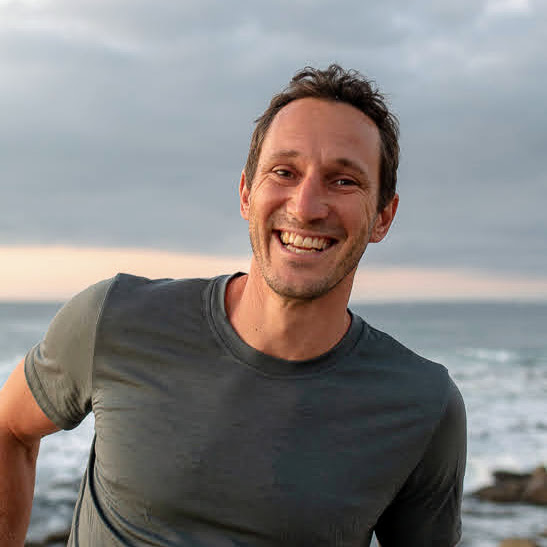
Chris Blachut [blah-hoot] is a decoder. Through his Innate Edge methodology, he helps people figure out how they're wired so they stop scattering their effort and start compounding it. Product-market-fit for people. He's from Vancouver, Canada but flees to Cape Town every winter with his wife and two young sons.