Ep110 Lynette Xanders—How Wild Alchemy Transforms Fragmented Teams Into Creative Powerhouses


In this episode of Strategy & Action, host Jason Croft sits down with Lynette Xanders, founder of Wild Alchemy and former strategist at Stan Richards' legendary agency.
Lynette reveals how she evolved from account planner to culture transformation specialist, working with brands like Nike and Adidas and agencies like Wieden+Kennedy.
Jason guides the conversation through Lynette's unique approach to solving the training gap that plagues most companies: what happens after the workshop ends?
Learn how creative briefs become activation tools, not just documents.
Discover why fragmentation is the #1 killer of brand consistency and team performance.
Understand how to diagnose whether you have a brand problem, culture problem, or something else entirely.
Lynette shares her "golden time" framework for building high-performing creative teams, the exact questions that reveal whether someone can think strategically, and why efficiency fuels creativity instead of killing it.
Plus, get the truth about why most corporate training fails and what to do instead.
If your team is disengaged, missing deadlines, or bleeding talent, this episode shows you the real problem and how to fix it.
Lynette Xanders 0:00
I always say to people, may you be in a golden time, and may you know that you're in it. That was absolutely a golden time. Did some great work, loved the people. We've got to like, establish our own culture. We got to do whatever it was that we needed to do, to do our best work. Won a ton of awards, made some amazing ads, and we just had so much fun doing it.
Jason Croft 0:21
Welcome to strategy in action, where we reveal how industry leaders build real market gravity, the force that naturally attracts opportunities, partnerships and profits. You get raw insights, proven frameworks and strategies that actually move the needle in your business. Let's get started. Lynette zanders, welcome to the show. Thank you for having me. Absolutely. I'm so glad we connected on LinkedIn, like two crazy people getting together and saying, Hey, you seem kind of cool and you seem kind of cool. Let's have conversation and see if we were both kind of cool. And that was a blast. It was an hour plus, and just those following those instincts a little bit like I love her wild alchemy brand name, and that's enough for me to dive in and want to learn more. So I'm glad we did, because it certainly led to not only a fantastic conversation, but this interview right here. So thanks for being on I really appreciate it
Lynette Xanders 1:28
My pleasure. Glad it all worked out, yes, go where the wind takes you sometimes,
Jason Croft 1:33
yeah, and that's that's going to be a bit of a thread here, through your story and how you help companies people? Because there is some of that, both in the journey of getting to where you are now, but also your approach to helping these companies. And I want to touch on that a little bit so that we tee folks up. But this idea of, you know, really, there's such a unique aspect that, you know, I shared with you that I loved and I grabbed onto of your background, both this creative side and then culture building side and training side, that is such a unique combination, both in what You bring to the table, but also that solution, and really digging into this idea, and we'll get there to this, this core topic today, of what do you do after the training? You go in, you help you impart wisdom. Awesome. Then what? Then what happens? And that's such a core differentiator on how you help people and companies. So give us a little bit of background, though, coming into this from, you don't have necessarily, a traditional you didn't go to college for I'm going to train corporations and going with this kind of aspect, you started on that creative side. Walk us through that a little bit.
Lynette Xanders 3:07
It was absolutely going where the wind took me. I went to college for Well, I graduated with a degree in persuasion, so behavior modification. So how do you get people to do what you want them to do? And I didn't know what I wanted to do. I just took the classes that I enjoyed and that were interesting to me. And, you know, worked for an ad club for a minute, and they said, you know, how do you get people to stop smoking? And I was like, Oh, well, maybe they don't have all the facts, and so you gave them the facts, and they're like, Oh no, I totally know all this. And I'm like, Oh, well, this is not a logical decision. Then there's so many other factors in there. So kind of followed that, and I followed things that interested me. I ended up in radio. So you can brand radio station, you can brand anything. Fell into a conversation with Stan Richards, of all people, told him I hated advertising. He thought that was fantastic, and offered me a job as a strategist. So I was one of the first four or five account planners in the US. So shite day came first, and then Stan was like, well, Jay has planners. I want planners. I'm like, I don't know what this job is, but seems cool. It's like, okay, Teach me. Teach me everything. So I learned from a creative guy in a very creative agency, and make a long story short, his whole approach was solve the problem to grow the business. So I got to do whatever I wanted. It was like lack of oversight was fantastic. But you know, you knew if you were winning, you knew if you weren't winning, and you just kept doing it till you won.
Jason Croft 4:49
Correct me if I'm wrong, but all what I know of Stan Richards too, though, is this great work ethic component to such a. Creative industry. Yeah, it's not about inspiration. Sit down and work. Inspiration will get there. It's it was that showing up aspect that I remember from the things that I've just learned and read about him did. So there's, that's an interesting dichotomy, right, of like, freedom. I don't know what this is. And, hey, let's just solve the problem. Let's figure it out. But it's also a work ethic, correct?
Lynette Xanders 5:26
So smart, yes, he changed my life truly, with just a comment as, I mean, my office was a mess. And he was like, you know, I think you're have misconstrued the idea of being creative with being irresponsible or inefficient or free for all. And he was like, I get to be creative because I am so measured in every other part of my life. He said, efficiency doesn't kill creativity. It fuels creativity because you steal time and energy from things that don't matter so that you can spend that time and energy on things that do matter. Oh, that's beautiful. That good. So now it's a game. How do I keep everything? I don't get decision fatigue on on mundane things. I save it for the the big, juicy stuff, and you don't solve the problem sitting in front of the computer.
Jason Croft 6:21
I love that. Yeah, I can see how that's such a pivotal point in your life, much less career, to approach life differently than you did before. So what did that kind of entail that that role strategy planner was like, What is this? What did that end up kind of being
Lynette Xanders 6:42
going out to talk to consumers, people, regular people, and bringing those insights back into the agency so that whatever we made was more relevant, the people could see themselves in it. We were solving real problems. We were talking about real benefits. But I think one of the other things, and it might have even been in the same week that he said, your job is to be of service to the creative department, because we have to create things and put them out into the world, and only then can our clients brands grow. Can their businesses grow? It's all about what we put out there. So from an early age, I was like, I don't want to do research and have it sit on the shelf, like, if it isn't in use and I can't see that it's in use, then I haven't done my job. And so he said, Okay, if you are really of service to the creative department, you need to know what they need. And I said, okay, cool. What do they need? Stan? And he's like, I don't know. He's like, go find out. And I'm like, there are 40 creative people. He goes, well, then you better get started. And it made me realize that every creative director or creative person I talked to needed something a little bit different, like there were some common threads. Tell me who these people are. Tell me why I like them. What problem are we solving? You know, who's influencing this decision in their lives, but some people wanted me to paint a picture, and some people wanted me to help them determine what the questions were, and some people, you know, wanted me to see what kind of work that resonated with them. So everybody was a little bit different, even though we were all trying to do the same thing.
Jason Croft 8:22
Oh, that's fantastic, because that's that's that first experience for you. Of what we were just mentioning, and we get into now is, yeah, it's not about the rigid approach. It's what's the outcome we're going for. And this person needs it this way, this person needs it then, and they're all correct, right, right? It's not a wrong way. It's just different, wonderful, unpredictable humans that need things in different ways, both on the creative side and what they need, but also those consumers you're going out and talking to, they all, you know, it's not the mom of three who, okay, well, all moms of three, we know now they need, no, no, it's not how that works. You can get directional with some of that stuff.
Lynette Xanders 9:15
There's more than one right answer, but everybody needs something a little bit different to your point, and it's meeting them where they are and making it super simple to understand, to grasp, to talk about, to remember. Some strategists love the complicated, and my belief is that my job is to simplify the complicated and ultimately get people to fall in love. I need to get consumers to fall in love with the brand and the product. I need my creative team to fall in love with the project and the insight. And so from that standpoint, it's it's not rational, and it's absolutely not a template.
Jason Croft 9:55
That's what's interesting, because I think we can easily wrap our heads around. And an industry like advertising and dealing with creatives and marketing, and easily accept that it's not about a template, it's creative. It's this. But when it comes to these other areas of business, we tend to follow the gurus who say, this is the, this is your path to selling a business. This is your path to productivity. This is your one way that you can do it. And you the rigid standpoint, okay, I guess it's, yeah, it's that kind of thing that makes sense and and yet, all of those things fall under this idea of, it's not a template. There's so many factors, and I think that's a piece of it too that comes into personality, a little bit of being comfortable with there's no single right answer, or there's more than one right answer. Some people are just wired of I need I need one. I need tell me what to do. I need this. And other people I would include myself are comfortable in the gray. It's gonna need to be black or white. I'm, I'm happy with that middle ground.
Lynette Xanders 11:11
Yeah, I feel like it may be a lack of time that drives that as much of just it's, you know, my brand issues and my I don't know people issues and all of this stuff is 15th or 20th on my list as a C suite. Exec, so give me the easy answer, give me the silver bullet, give me the infallible plug and play. I don't have to do anything but send people to this training. Yeah? Okay, maybe,
Jason Croft 11:44
yeah, I can sell you that, but it's not gonna work.
Lynette Xanders 11:48
It's not gonna work exactly,
Jason Croft 11:51
yeah, so let's go now, after Richard's group. But where did you go there? Because that was a big shift, and then that that next, I guess, thing in your quiver, that skill set that you got going next,
Lynette Xanders 12:06
yes, and it was following the glitter wind. I went up to Vancouver, BC to ski, and decided I wanted to live there, and I would take any job that I could get to live there. Clouds opened up. BBDO had an office. They had a planning discipline, and they were willing to hire me and get me an H, 1b so okay, it was in an apartment, though, that was smaller than my closet in Dallas. So it was, it was a massive culture shock, and I have come to realize that I crave culture shocks I've loved now just going, Whoa. This is a whole different playing field that I'm in.
Jason Croft 12:49
Oh, yeah, because every sense is activated when you're in that and everything's new. That's Oh,
Lynette Xanders 12:55
that's awesome. Yeah, they're speaking multiple languages, and the money's different, and the food's very different. I had shop every day. There was little corner store. It's, you know, and Dallas is Costco. Fill her up. So I worked at BBDO, and it was a golden I always say to people, I may you be in a golden time, and may you know that you're in it. And that was absolutely a golden time. We just had a ball. Made some did some great work. Loved the people. They hired, some people that wanted to change the whole culture of the agency and templatized. So I ran away from home again and I went freelance. Moved to
Jason Croft 13:38
Toronto before you go there, though, what made it golden? What do you mean by that?
Lynette Xanders 13:42
I feel like, and not just the creative department. Had an amazing creative team. I had an amazing account service team. Like everybody was top of their game, and they we all wanted to make the same stuff, and we trusted each other, and we got to, I think, in almost every golden time that I've had, we got to, like, establish our own culture. We got to do whatever it was that we needed to do to do our best work. So we instituted Happy Hour Fridays. So, you know, we could bring blenders into the office and make margaritas and whatever. But we would post our work and post our briefs on our walls, back when there were offices and walls. But we'd go around with markers, you know, with red dots and green dots and go, love that. Love that. Maybe not so much, but everybody kind of got to see everybody's work and give input on or feedback on everybody's work in a non confrontational environment where bosses weren't listening where it was didn't become personal, but we just up leveled and supported each other. Won a ton of awards, made some amazing ads, amazing. Yeah, and we just had so much fun doing it.
Jason Croft 15:04
Oh, yeah, that lack of competition in it. It's just collaborative in its purest sense, right? Sounds like
Lynette Xanders 15:13
really was, and it was fun. We were just making stuff. There was no fear. I'll put it that way. We weren't afraid of our clients. We weren't afraid of the bosses we we were just kind of, this is the best job on Earth. Let's how do we make this sing?
Jason Croft 15:33
Oh, that's great. So unfortunately, someone comes and rains on that exactly run away as you mentioned, yes, no freelance, yes, in that same kind of role, that planning, strategic kind of role,
Lynette Xanders 15:45
yes, I met, you know, Kismet. I met someone who did freelance planning, which, at the time was extremely revolutionary, but he was like, you know, moderated groups primarily, but would go in and do workshops and just kind of helped agencies get the insights and an up level. And he's like, I will teach you how to do
Jason Croft 16:07
it that kind of speaking to consumers like you were doing at Richard's group.
Lynette Xanders 16:11
Yeah, well, because it turned out like we were working for the Leo Burnett's of Toronto, for example. So Labatt and Bell and those planners, those strategists, did not have time to go out and talk to people, or, you know, sift for insights, or, you know, do a big debrief. They're in meetings, meetings, meetings, which is now kind of more the norm, but it gave rise to, hey, let me go do this for you, and I will paint a picture for you, and then you can go babysit it inside the agency, which the one piece I missed was working with the creatives, but I didn't miss the meetings, so it was a trade off,
Jason Croft 16:57
yeah, but yeah, you could go in there with, Hey, I've been in your shoes. I know what you need, specifically with these conversations with consumers and everybody. Let me go do that. So that was a chapter for a time. And then where did that evolve to?
Lynette Xanders 17:12
I went back to so the people who were at BBDO left, and they started another company, and that got bought by shy at day. And so when they kind of took over their own destinies again, they said, hey, please come back and play with us. I was like, okay, Toronto is freezing. I'm going back to Vancouver, but I did it like a permanent contractor. So I could still go work for other companies. I worked for them, but I would show up, and I did more of the meetings for them. Loved the people, knew the people. It was another. It was grand. It was fabulous. But one of the companies that I freelanced for was Wyden Kennedy, and they brought me in for Miller High Life, and that just kind of sparked a whole new, ooh, new sandbox, new people, in
Jason Croft 18:08
terms of that level up of Oh, white, Kennedy agency, this is, this is another level
Lynette Xanders 18:15
here, running Fast, yeah, and seriously fearless, like to a different degree.
Jason Croft 18:24
Did they they had Nike, or did they get Nike? They had, I think
Lynette Xanders 18:29
they basically launched Nike, so, but they were, at the time, working with Diet Coke, they were working with Microsoft. But, you know, they had a Rolling Stone song that they could use to launch Microsoft as the soundtrack, like it was just a whole new ball game of possibility.
Jason Croft 18:49
Yeah, I remember that was a big deal. Big deal, that song I remember, and maybe they were involved in that too, the revolution from The Beatles for Nike with the air. I remember both of those being not just the ads but the news story around this licensing, big conversation, yeah, yeah.
Lynette Xanders 19:12
They were not afraid of the limelight. This is where the transformation kind of started. Was doing that for a while, loving it. Can't remember exactly why I decided to go back to the States, but it was a moment I had a Newfoundland and I lived in a high rise. So this is how crazy my follow your glitter winds sometimes turns out. And I looked in the newspaper and there was a houseboat for rent on Lake Union. And I was like, I've always wanted to live on a houseboat, fascinating. And somehow I ended up talking to somebody at DDB in Seattle who was like, come come down here. Give us a year. If you don't like it, go back to what you were doing. But. It, Try us out. And I thought, I'm in a houseboat. That'd be fun. My job at the time, account planning is what it's called, was super hot. Everybody wanted a planner, and we couldn't find any. So that was the first time they were like, well, you're just gonna have to grow your own like, find some people, train them up, teach them how to do what you do and think like you, how you think I was like, I don't know that. I don't know if I can do that. I don't know. So decided I'd give it a go, which was fascinating, to try and teach your discipline to somebody else.
Jason Croft 20:37
Talk about focusing on, okay, what? Exactly, what do I know and leveling up of yourself when you Oh yeah, I do this, I do that, oh yeah, that's and
Lynette Xanders 20:48
here are the questions you ask. And one of the things that struck me, that made me realize I was a little bit different than the people I was running into, is I was hiring. I wanted people Stan did this straight out of school, so you didn't have to, like, retrain them. And I remember sitting down with this guy who now is crushing it in New York. He's just doing so well. But I was like, Okay, so tell me about the last movie that you saw. And he was like, Oh, I don't really watch movies. And I was like, buddy, like, if we can't talk about movies, we can't talk about ads, we can't talk about ideas. Like, I know that you don't have anything to do because you're supposed to be here talking to me. So go see a movie, come back tomorrow, same time, and we're going to talk about movies. And he saw two movies, and we just, he just was on fire. I was like, oh, yeah, you can talk about ideas. Look at that awesome. But yeah, I wouldn't have thought that that was a key principle in designing kind of a training thing of talk about ideas.
Jason Croft 21:54
That's interesting to find. I love that kind of stuff, of that unique little humanness. How do you get to that. Here's the here's the skill we need from somebody, what? What's an indication of that skill? Rather than, do you have the skill? Yes, I do. Okay, check what's an indication of, do you really have this skill? How do you think about this? I've never thought about it. Okay, you don't have that skill. Or whether we developed it or bring it out, that's fascinating.
Lynette Xanders 22:24
It's a way of thinking. So then we realized, Oh, hey, that's working with individuals. What would help support them and help us succeed is if we trained everybody else in the agency so that I could get my strategist maybe to be a little more creative, but I'd get everybody else to be a little more strategic and kind of build some of this connective tissue. And that seemed to work really well. And then the company was like, can we teach clients a little bit of this so that it makes our jobs easier and we're not kind of pushing water uphill all the time, and, you know, almost fighting to be heard. Like, can we create a culture with clients that is more level set, so that we are building things together,
Jason Croft 23:06
educating that client on process, why things matter, giving them just enough. Hey, this is, here's, here's a little bit of human psychology. Here's a little bit about creative. Here's a little bit about strategy, what we're trying to accomplish. Because it's, it's not that. It's not Miller High life's job necessarily to know that, or a smaller company to to understand at the depth that an agency would so give them just enough to here's why we're going in the direction now make a decision rather than, yeah, just butting heads of I'm sure the typical thing is, I don't like that.
Lynette Xanders 23:45
Okay, you're not the target, yeah? And I think when clients at the time anyway, were, you know, a brand is a logo, a brand is a set of colors. A brand might be a tagline. We're like, no, a brand is what people think of you in the brand is a magnetic virtue. You know, getting down to that one word emotional benefit, and just even getting them to shift that 10 degrees changes the whole conversation. It changes how they see the work that you're putting in front of them, and how they think it might work out in the world, and that really kind of lit my fire around teaching people. And I almost, I hate to call it Training, but also hate to call it research, of, you know, uncovering insights and activating them.
Jason Croft 24:34
Yeah, neither one of those encompasses that full thing. Yeah, maybe it is. I mean, you've got that term of the wild alchemy, yeah, you get it. Is that alchemy of all these things together? And if you kind of have to have a term like that because it isn't training, here's what you do, step one, step two, step three. And it's not just research. When I think research, it's okay, what's the data? What's the demographic? What are those? And. To be the psychographics of this. You know, it's so much more than that as well, but you gotta, you gotta have it all and shake it up in a bag and have that going in, so that that really was the the catalyst, and where you are now really too, with these brands, with these companies, to go in and do, what would you say is that main solution you're going to and and you've worked with the agency side, the client side. What side is that right now? Are you going into agency still? Are you working directly with corporations, with different companies and brands?
Lynette Xanders 25:37
The closest thing I have found to a silver bullet is creative brief. So I wrote a book about killer briefs, how to write a killer brief, and I set out to train all my agency friends. I've worked with a lot of agencies on guys. This is an output that you can charge for, because they weren't really charging for strategy. They were charging for creative and just kind of giving the strategy away.
Jason Croft 26:01
Define that too, for our non agency folks, of of that brief, it's kind of a proposal, kind of a here's the direction we're going in.
Lynette Xanders 26:09
It is a one page summary of what we're making, what we want to have happen, who we're talking to, what's the mindset shift that that they need to make? So remember, I went to school for persuasion. The key is, in order for somebody to do something, they have to believe something. So the brief outlines what we need them to believe in order to do what we want them to do, and then this is what we need to say. This is why they will believe us, and this is how our brand should show up. And all of that is on one page, but it all has to kind of hang together and training clients. You have to kind of teach them, and even agencies what each of those pieces entails, because when it falls down, and I've trained Nike, I've trained Adidas, I've trained corporations, so I have moved more into corporations than agencies. I think after the shutdown, agencies took a lot of things back in house, and they're trying to hold on to every dollar they have, so they hired me less, and companies now have internal agencies more often, and they are hiring me more, so teaching them kind of how to do it, how to use it, how to rally around it. So that is a big process shift, but it saves. So I'll give you a quote. So when I was, you know, pitching agent creative briefs to the agency, I had a lot of crossed arms and a lot of emotional crossed arms, because this is a piece of paper. And I'm like, Yeah, but it's not a job order like, this is a springboard. This is the first creative idea. And by the end of my tenure, they said, Oh, I think we kind of get it like we never seem to have enough time to do it right, but we always seem to find time to do it over. It saves all the do overs and makes it better and makes it integrated. And now, with companies having multiple agencies, I've got a different web development firm from my PR firm from my agency, like they have to have a brief just to keep it all aligned, get your train tracks have to line up,
Jason Croft 28:24
going back to what you mentioned before, it's also this piece of that is a product to charge for, again, not just giving that away, like if you're defining that, here's what everything needs to rally around. That's something that they could take and run with somebody else. Like, Oh, you're right. We do need to do this. And instead, that's such a massive thing to define for a brand, that belief shift that they need to make with for their customers, that's a huge insight for them. Yeah, absolutely, that's a product to charge for,
Lynette Xanders 29:03
yeah, well, and for the client, they could hire a freelancer, and they're even agency, they're on board immediately. They could have a CMO leave when a new one came in, and things are documented. Can be, you know, passed down. But I think the real benefit was it was the last place we all agreed before we wandered into creative development. So by the time we were showing creative or they saw creative, everybody kind of understood what we were trying to do with it, which was such a difference maker. It's one
Jason Croft 29:34
of those things that you go, Well, yeah, of course you would have that and yet, and yet they didn't. It's so much, because when you think about the ad is, it is here's this creative just in and of itself, on its own. I guess I like it, you know? But when it's, oh, remember, this is where we're going, right? Oh, this one. This is beautiful. Love. It funny. Not where. We're going into be able to to have that. And, my goodness, talk about needing that in every aspect of a company, right here's where we're going folks to have that. And it is. It's one of those things that seems so simple. Of course you would have that isn't,
Lynette Xanders 30:19
isn't there even big companies, they have the time and the money. It's just, if you're not trained on it, then they it is a job order, and they'll cut and paste and just grab jargon and it's, it's blah, blah, it's whatever. The creatives at the Richards group, when I first joined, they wrote their own briefs, the stand required briefs, and that was fascinating. But the shift was after I could I taught them, okay, this is what a creative brief is. This is how we write a good one. This is how we know if it's working. This is how we tie it to the creative they would say, Okay, we have brief, and we're all just sitting around looking at each other still. So, like, now, what like? How do we get this wheel in motion? What do we do with it? How do we work in an integrated way? How do we brainstorm? I had agencies call me and say, My people are sitting in there looking at each other, and nobody's saying a word. Wow.
Jason Croft 31:17
Fix it. It is such a common problem too, right? Because that is, it's that last mile. It's never that connection point. Even when everyone is there, there's no fighting, there's no arguing going on. Everyone's like, yes, we agree
Lynette Xanders 31:32
with that. Let's do it. Someone should do that. Crickets, yeah.
Jason Croft 31:39
And so how do you go in? Then, what is that activation point for for someone, when you've gotten them, okay, either they're creating briefs on their own, you're creating them for them. What is that activation point?
Lynette Xanders 31:52
And again, it's not a an activation point. One of them might be we just need to bring the customer to life in a in a more intense way. So I worked in Dallas on sales, which is also owns Gordon's jewelers and Bailey banks and battle so we call them media diamonds, little diamonds and big diamonds. But we had the same creative team, and they just they couldn't figure out where one line stopped and the other one started, like how to separate the brands, so we had cardboard cutouts, and when we had a sales customer, we'd bring the cardboard cutout of this person and keep her in mind, and the Gordon's person a little bit different, and the Bailey banks and Biddle a little bit different, but they needed help with guardrails. One Agency their fear, well, had happened was they would kick around ideas in a brainstorm and somebody would be writing the deck in the same meeting. So they were like, I haven't even had time to think about it, let alone talk to people about it. And now, all of a sudden, I have to defend it, so I'm going to keep my mouth shut. So we did a workshop to kind of unpack this, to go. What is the problem? Or can we just not come up with ideas? Do we not know how to talk about it like, no, no, we're good. We just need to break up the thinking time from the talking time, from the writing time. And then some of them are getting inspired, so bringing in ads from that they didn't work on to say, what do we think is the best work that's out there, and why do we think it works? And really just kind of getting them on the same page with, why TV? Why outdoor? What is the website supposed to do? Like, we're in the journey. Is this supposed to work? Because everybody's like, Oh, we have a brief everything's gonna say the same thing. No, that's not how that works, not how it works.
Jason Croft 33:44
Well, we all need this, right? I think, I think you and I kind of touched on that a little bit too in our conversation of the reason there are coaches out there, the reason there are people to these outside forces to help us see and get outside of our everyday we do we get locked in back to just time? It's efficiency. Okay, great. We got the brief. We got the thing duplicate, and really stopping going, Oh yeah, if someone is on a site for jewelry, what's that intent versus I'm driving down the highway. We need to interrupt them. We need to grab their attention with a billboard to make them want to spark something else. Those are vastly different mindsets. Yeah, what's the
Lynette Xanders 34:31
problem we're trying to solve for fast food? It was like, I'm not going to make a left hand turn to get it unless it's wildly different. But just because I love anecdotes, sorry. So it talking about it was a and w, right, and in Canada, and they said, We want to be the best burger. So we recruited all these people who ate a lot of burgers, a lot of different fast food burgers, and we said, Who has the best burger? And. What, what does it entail? And the best quote that I had, I had guy go, you know, burgers are kind of like superheroes. You can't say Spider Man's better than Superman. It depends if you need what Spider Man has or what Superman has. So it just changed my client's thinking totally it was like, decide what occasion we're perfect for, or the taste craving that we're perfect for. Instead of going we want to be king of the hill, it was like, where do we fit in the landscape of things? Beer is the same way people rarely drink just one type of craft beer, one's a starter, one's a finisher. And then there are some kind of in between. So yeah, just figuring out the Miller highlight. The problem we were solving with advertising is that they were embarrassed. They the beer was nostalgic for them, but they knew that it said to the rest of the world that they were cheap. And it was like, how do you change what it stands for? So it was symbol of a real man, which came from a question, Who or what is the enemy. And they were like my son, who doesn't get his truck dirty and drinks those micro brews and cries at commercials. Oh, that's fun. Let's play there. Because it's always about what it says. It's what it says about you as much as what it does for you.
Jason Croft 36:25
Yeah, back to the very beginning that you brought in to this in your first experience. It's all human. It's people, it's emotion, every every decision. We can back it up with logic later, but it's all emotion and playing in that that's the fun piece. But it takes again, sometimes this outside force to slap us around a little bit and say, Stop thinking in your your little silo, your area. And let's, let's pull from, you know, when you have those inspiration moments too, it's out. Let's, let's let's get outside of our industry. You have those different cardboard cutouts, right? The Avatars of your ideal clients, like you mentioned for sales, yeah, who else is reaching that person? That's not jewelry, that's not anything else, but they're grabbing them. They're doing it well, finding those inspirations. That's, I don't know that's fun stuff for me.
Lynette Xanders 37:20
It is fun stuff, but even internally, it's all emotion and it's all human. I'm afraid to give you an idea, because you're going to hold me to it, even though I haven't really thought about it that hard. There's always a fear and there's always a desire. So it's kind of putting tools and thinking in front of them that's simple, but also helps them reach their goals or overcome their fears.
Jason Croft 37:43
What does that engagement look like now? To do that, what problem is happening with either a brand or an agency like we've got to get this solved. Where you are. That solution for them,
Lynette Xanders 38:00
I will say the number one problem is fragmentation. So we have different departments and different business units and companies, even like Nike, have gone let's do golf. Let's do frisbee golf. Let's do fishing. And there's no glue. So finding the common thread like, even though you can be very niche in your customer base and how you talk about them, it still has to ladder up to the mother brand. And I don't think anybody's in charge of doing that rarely and they're not in charge. Nobody's in charge of culture. So my unicorn clients, I would go in and do some research for them, because research rallies people around human insight. This is who we're talking to. And not all customers are created equal. And I got a whole other thing on that. But you find out who you really should be talking to and what makes them tick. We do some team coaching, training. This is strategy. This is good work. This is less than good work. This is how we might play better together. And then I would do leadership team coaching, because they are all siloed and they don't know what they collectively are in charge of. So they have a body of work, one of which includes culture. So how do you kind of get rid of the speed bumps that get in people's way of doing their best work? And there's a survey that I usually do, an internal survey, and you find out what lifts people up and what drains them, and do they want public kudos or private kudos? And I have yet to find a client that knew this information. They were like, oh my god, this is just so helpful. It's amazing. And then I will do one on one coaching, kind of over over time, just to kind of make sure, you know, those real time, real world, solves that ordinary otherwise would, they would just kind of fester, and people would stop and go back to the way they. Were doing it before, but I always say I'm like a therapist, and that usually it will take, you know, I could do a project in six weeks, a unicorn client, if I'm doing everything, would probably take six months. But if we're still talking about the same things after six months, fire me like I've had clients that I've worked with for 15 years. But we just keep laddering up, and we solve a different problem, and we get a little bit better. And it's, you know, that kind of constant evolution toward amazing
Jason Croft 40:29
but what's happening in like, what are the warning signs, right, when someone needs what you do? What? What's that day to day for them that they're like, oh my gosh, if I have to deal with this one more time, what are those elements that would warrant? We need Lynette. We need we need to bring her in.
Lynette Xanders 40:51
There are a couple of warning signs if your team is disengaged, like, even if they're on remote and people are cameras off, or nobody's talking, or they're missing deadlines. Like, that's just like, Oh my God, what do I do? When Nike called, they said, We are bleeding market share with women. Go so there's a sales problem, and then everybody cares, and then they're like, oh, fix this. Fix this. Or there's a churn problem. They're just losing people, and they're losing they're good people, and that can be one of those indicators where they'll be kind of, oh, shareholders or boards of directors usually go, Hello, this is not we're spending so much money on relocating, retraining, rehiring people like this is not normal. Can we? Can we, please fix this?
Jason Croft 41:40
And that's where you come in to then do that diagnostic, right? It's not because there's some surface level people internally, they've probably tried it, it's managers, or it's just that instead, it could be something so far removed from everybody else's day to day. And again, getting people that fragmentation you talk about, you have no idea this is happening down the line, and they're just churning folks because of it. And that's where you can come in again, this outside force to come in, oh, a little bit of deep dive and digging.
Lynette Xanders 42:15
I always say they come in the wrong door, like if a client comes to me and says, I have a brand problem, and I investigate nine times out of 10. It's not a brand problem, or it's not a culture problem, or it's not a sales problem, it's it's something else. But to your point, you know, they think this is the which is why I think a lot of consultants, or a lot of work that's done training work is is not effective, because they're, they're hiring for the wrong problem.
Jason Croft 42:42
I don't care what you do if you don't do that deep dive first or that at least a couple of steps back. I mean, somebody comes to me, I want a podcast. Okay, cool. Hold on. Why do you think you What do
Lynette Xanders 42:58
you want to have happen? Yeah, exactly. What do you
Jason Croft 43:01
want the result? Oh, you actually don't need that. You need that's the piece. And to your point, I'm sure they're maybe even the majority of folks. Somebody comes to them, Hey, we want to hire you your consultant in sales. We want somebody to help us do well, cool, and they're an order taker, and they great. We're going to evaluate this. We're going to do this. Here you go. And of course, there's incremental maybe help. But yeah, if you're not, if you're not solving for that the disease rather than the symptom,
Lynette Xanders 43:36
you're in trouble. Yeah, yeah. 100% the best thing I heard a client called me once, repeat client, fair enough. But I said, Okay, so what's going on? What's the problem? And he's like, I have no idea what the problem is. That's why I called you. I was like, Well, so what are the symptoms of the problem? Oh, I can't take vacation. I'm not sleeping at night. My clients aren't have, like, give me the symptoms, like a doctor, like, root cause, but give me the symptoms, and then I'll sniff around, do a little audit and go interesting this what and the solves are usually pretty easy. Truth be told, I always say revolution is more series of 10 degree shifts than 180
Jason Croft 44:17
degree shift. So as you've evolved with this too. You're getting into a little bit of the DIY. You're taking this with your unicorn clients, like you mentioned, that you have and some of this knowledge, and now you're starting to bring that out, maybe a little more accessible. Maybe smaller businesses can take this, maybe a coach, consultant, individual could take some of this. How is that showing up and evolving into the do it yourself kind of aspect,
Lynette Xanders 44:48
even when a company knows they need the help like I will have, I know that there's a problem when I've written like eight proposals to try and design something around their needs and their budget. Word and some weird sense of timing that they have so they know they need it, but they, for some reason, can't pull the trigger. But the people internally are all kind of going, please, can I have some of that? Please, help me? Please. Can just teach me this or just teach me that? So I'm finding I'm having all these one off conversations because I adore people who want to get better, and I'm compelled to help people who ask for it, and I would probably have better conversations if I could just I, for 20 years, just given this stuff away, but it's not never been all in one place. And, you know, with technology now, I can put courses online, got YouTube's coming out books I probably will never do again, because I have to have inventory, and I'm not doing that, but ebooks, I'm all about it. I kind of to the point where I want to help as many people as possible, and they're different. People need different things, and meeting them where they are. So sometimes they're they're newbies in the business, but I've had CEOs who own agencies who were like, I've never written a brief. I've never asked anybody to write a brief. They're things that I have now used long enough that I know they work. I found a way to kind of teach them in a non one on one or face to face setting.
Jason Croft 46:17
They may even be running a department they have a certain budget to work with, even for this, but it doesn't fit to bring you and the whole shebang in for this. But oh boy, do they need it. And even if my department wins with this, that's huge. So it's those kind of use cases all the way to, like you said, maybe the CEO just in and of him. I need to wrap my brain around this part just for me, and I'll operate my business differently indeed.
Lynette Xanders 46:54
So it's breaking it up, I guess, into modules that different people can get what they need when they need it,
Jason Croft 47:01
what form is that taking? When's that launching? And all that. That's good stuff.
Lynette Xanders 47:05
All that good stuff. I am. This is where my Canadian, woo, woo. I'm not Canadian, but I lived there long enough, you know, they always had a Feng Shui master come in with a new building. And I was like, That seems kind of bogus, I don't know. And they were like, Don't knock it. Like you don't even have to believe in it for it to work. And the more I looked into it, the more I started believing in it, and more I've seen it. So I have feng shui, many an agency, and many an office, like Adidas office, and they're all into it. And it's like, ooh, one more thing. So I'm a big fan of Chinese New Year. So with the with that in mind, the website's probably going to launch in January. I'm going to soft launch it to my network, and then Chinese New Year, press and play.
Jason Croft 47:48
I love it. And across the board, how do people reach out, connect? I'm sure some people watching this are just like I am bought in I need, I need Lynette. I need, I need this in my life, in my company, how do they reach out?
Lynette Xanders 48:02
The best way to make sure that you get the 411, and all the stuff that's coming is my newsletter. So I've got enough of a website up that it'll capture that I'm an Instagram fan and a LinkedIn fan, clearly, so you can catch me via social but also just shoot me a note. Lynette at Wild alchemy.com. Happy to have a chat. Fantastic.
Jason Croft 48:24
Lynette, thank you so much. I love your journey. I love your unique approach for companies, for brands, all of this stuff just fantastic. Thanks so much for being here. Thank you for having me. I've loved it. Thanks for joining us on strategy and action. Remember true industry leaders don't chase opportunities. They attract them. Want to build your own market gravity. Visit media leads co.com See you next time you.
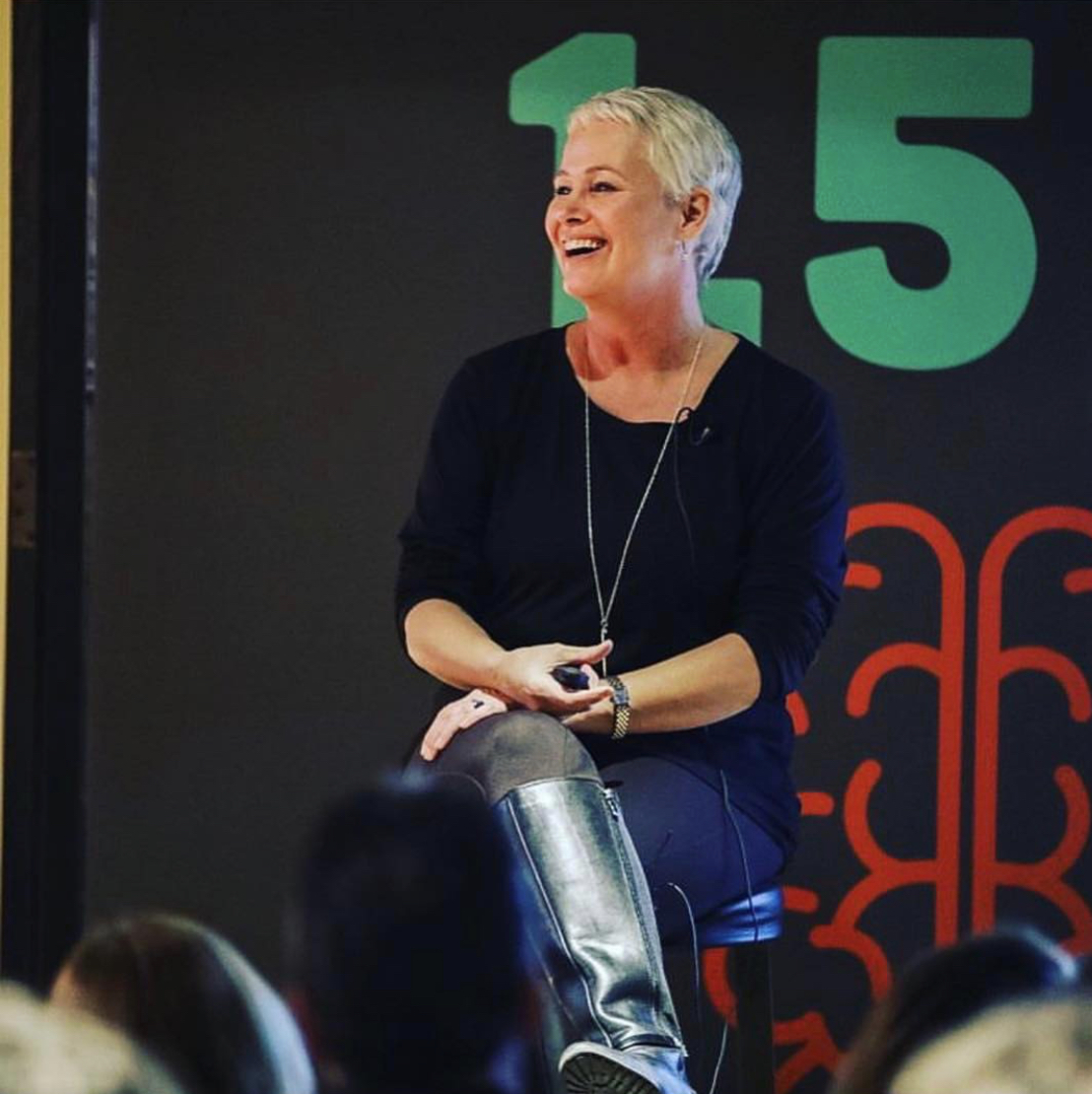
Strategist/Trainer/Author
An OG Account Planner at DDB, BBDO, Cole&Weber and The Richards Group turned OG remote solo-preneur working with the likes of Wieden+Kennedy. Primarily an insight gatherer and brand/communications strategist, I had to teach strategic people to be more creative and creative people to be more strategic and teach them all how to create and nurture ideas together--this began in my agency life and translated to helping clients with creative development (both internally and with their external agencies.) My books (How to Write a Killer Brief and Momentum) have been the foundational artifacts for many company offsites (such as adidas, Nike, ServiceNow, etc.) I collect fabulous living situations (houseboats, high rises, country retreats) and am ever in search of the perfect eggs benedict and croissant.


